
The Week I Stopped Using AI
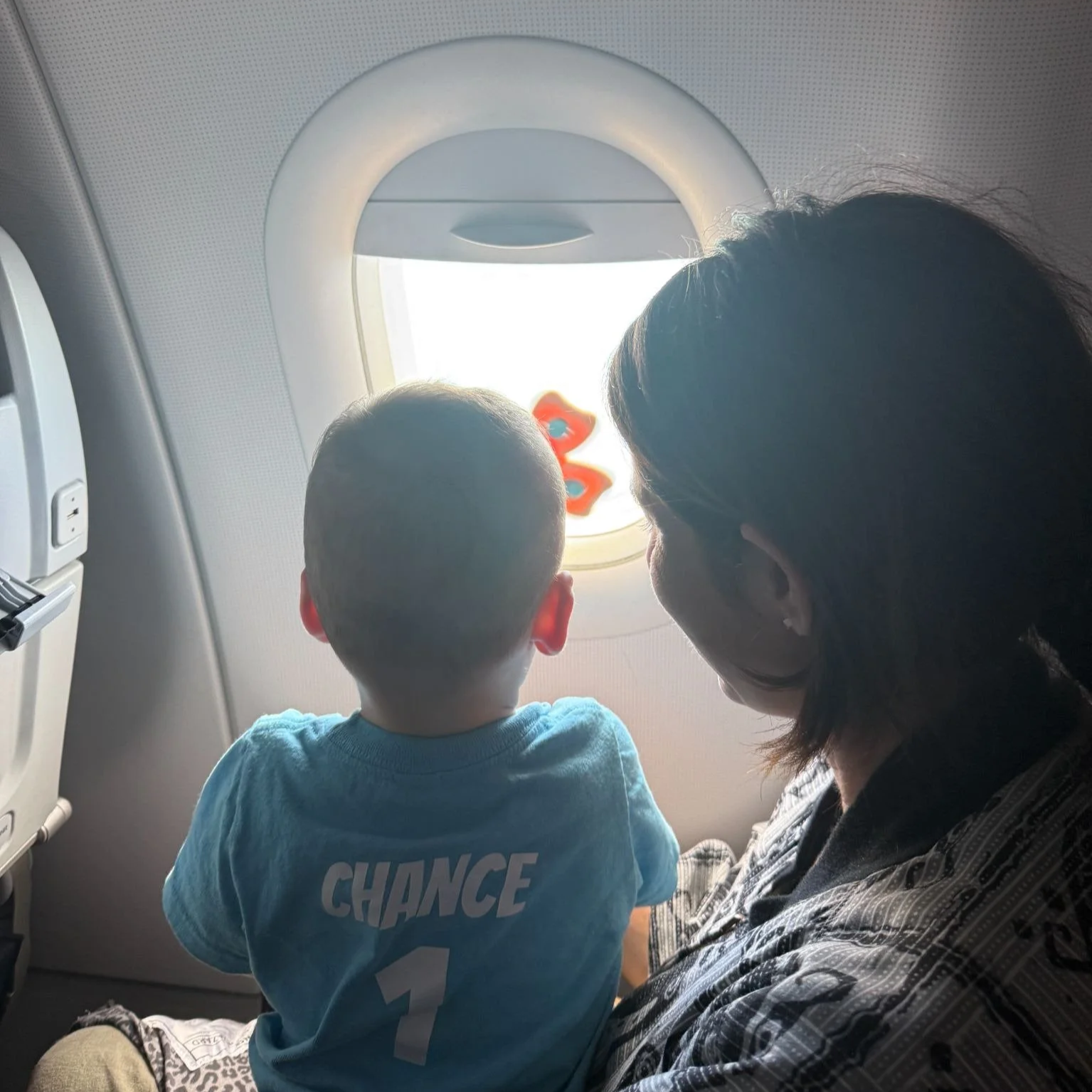
Chance and Katie admiring the world they feel lucky to be a part of
The week my nine-month-old fractured his skull, I stopped using AI.
I didn’t plan to; I was facilitating in London (my husband's and my first trip away from him, because, of course) while someone I love and trust was with my son back home. Our nanny lost her balance and fell while holding him, and no one realized he hit his head on a stair in the process. Within 24 hours of being back in the States, I was in an emergency waiting room, holding my breath as we waited to find out if my son had bleeding in his brain.
That was this past winter. He’s okay. Everything's okay (thank goodness), but I didn’t know it would be for a week.
In the agony of doctor appointments and waiting, my husband and I completely logged off. My team covered everything at work. What that meant was, without intending it, without planning it, I detoxed from AI and unplugged from everything work-related for the first time since coming back from maternity leave.
That week was terrifying, but once it became apparent that he was going to be okay, I began to see another impact of this time. As counterintuitive as it sounds, I actually started feeling good, like myself again.
At dinner, I could actually hear what my husband was saying (not just nod or grunt empathetically while my mind was clearly somewhere else). I stopped reaching for my phone to ask what activities to do with my son and started noticing how much he loved discovering his bath toys in random cabinets. I found it easier to make decisions instead of that irritable voice begging someone else to “just make the call”. And for the first time in months, I felt patience and genuine appreciation for the people on my team and their compassion, their humor, their ability to hear things the transcript forgot to mention.
I had been so excitedly consumed by AI, every new tool, every adoption conversation, every "what's next," that I didn't realize how much my use of it was quietly atrophying my ability to be present.
And once I saw it, I couldn’t unsee it.
AI adoption is not a technology problem. It’s a leadership problem dressed up as a technology problem.
How did AI quietly take over my work?
When I came back from maternity leave in September, I was using AI for everything. Emails, synthesizing, scheduling, feedback, finances, food prep, fashion analysis, analyzing what plant my neighbor just debuted, you name it. I felt 10 again with my Easy-Bake oven, thinking it could bake ANYTHING (spoiler alert: it does not). AI was genuinely, addictively exciting. I was saying things like “The universe is so kind that AI blew up right as I became a mom!!”
And the whole time, my relationship to AI was quietly eroding the parts of me that fuel my best work.
I know better. I founded HumanSide® because I love what we as humans are capable of. I was still training others on effective communication, strategic thinking, managing conflict, and leading through change - the things that are entirely human- and yet I was infatuated by this “easy button” concept.
What I am seeing over and over again is that the people, like me, who guide the best AI adoption are not the ones who never stumble nor are they the ones that know the most; they are the leaders who can name these moments, call themselves out for losing their footing, learn from them honestly, and build something better because of them.
The nature of AI as a product is that it is designed to want MORE. It’s built to keep us engaged. It always talks about the next thing, what might happen, what’s possible. I was letting it lead me and enabling that same pattern in the people around me. We had stopped reflecting and discussing what we learned or what we knew worked. Instead, every conversation was anchored around “what’s next,” “what’s possible,” or “what else.”
My husband, whom I met when I was crushing on him as my improv comedy teacher in Boston, would be the first to say: “The future doesn’t matter if we don’t take care of the present.”
I had forgotten just how important that part was.
I was consuming every story about how fast AI was moving, how far behind we already were, and that noise kept me spinning. I wasn’t discerning the best and highest use of my time or my team’s time; I was just going non-stop.
Until I detoxed, I couldn’t catch my breath long enough to see how off the mark I had gone.
Why is AI adoption really a leadership problem?
When I did get back to work, I had different eyes, and what I was seeing scared me.
If the AI-adoption narrative were a megaphone, the messaging would sound like this: “Have you seen this new toy? It’s going to change everything! I don’t know how it works, but damn, it’s fun AND important! You’ll be the best if you do, and a loser if you don’t. No time for nonsense, the party started, and you’re already late!”
That messaging, implicit or explicit (and I know I am not alone in broadcasting it), is also communicating something else entirely, whether we leaders mean it or not:
I am overwhelmed. This is BIG. I don’t feel confident in how to lead this. If we don’t get this right, everything might break. I’m going to get everyone on it so we have a better chance of things working out.
This is not leadership; in any other context, we would call that what it is: deflection.
While I was frustrated when my team wasn’t moving fast enough, I wasn’t owning the “why” behind adoption. While I was quietly judging when someone admitted they hadn’t used AI to help, I wasn’t acknowledging the unique judgment they were still bringing to their work. I was demanding adoption of a tool that, whether said out loud or not, was also a real threat to their values, identity, safety, and sense of belongingness (what if their daughter was terrified of AI and yet I was sending their dad home admitting he “has to use it at work or else?”)
We know better because we’ve seen this before.
What has social media already taught us?
We watched social media promise community and connection and deliver a mental health crisis. We watched these platforms outrun our ability to register what was happening until it was too late (only so many times I can delete and re-delete my apps). And here we are again, with a technological tool far more powerful, far more embedded in everyday work life, AND far less room for the excuse that we didn’t know better.
As individuals and leaders, we have access to decades (centuries!) of wisdom, knowledge, research, and practice that remind us of what makes humans thrive, what makes organizations succeed, what makes creativity come alive, AND what happens when technology outruns our capacity to respond wisely.
The question is, why aren’t we using it?
What does human development tell us about this moment?
My graduate mentor, Dr. Richard Lerner, one of the most significant developmental scientists of our time and an advisor to the Vatican on the intersection of morality and science, has spent his career reminding us that humans are designed to grow through relationships. Mutually beneficial, reciprocal relationships are scientifically proven to be the most important mechanism for how we thrive as a species. That reality does not stop when we get a job, nor when our jobs introduce new technology (i.e., AI).
In fact, AI raises the stakes for those relationships because as we delegate more to these machines, the unique human capacities of judgment, meaning, creation, empathy, discernment, and connection become our competitive advantage, not some soft afterthought.
AI doesn’t change who we are or what we need; it’s revealing just how important it is that we manage this moment and this technology right.
So here we are, looking at AI adoption and admitting to ourselves (out loud or not) that this tool can either erode or reinforce the things that make us human and make life worth living. The data show both are happening right now, in real time. The variable isn't the technology; it’s the people leading it. And most of that leadership is happening in the workplace.
The workplace is where most American adults spend the majority of their waking hours. It is not just where we earn a living. It is an environment that shapes who we become at the individual and societal levels.
The companies that will thrive, with any semblance of positive public sentiment, aren’t the ones with the best AI tools or the most ambitious AI strategy. They are the ones with the clearest and most honest people strategy.
The leaders who will earn lasting trust from their teams, their boards, and their customers are the ones willing to say out loud their version of: "Well, this is a lot, huh?" I don’t have all the answers, but I know who we are, I know what we value, and I know my people ARE the strategy to figure this out together.
This is not naïveté; this is the hardest and most important kind of leadership we need right now.
What do I want my son to learn from this?
I think about my son a lot when I sit with all of this. I don’t want him to learn that when something new and uncertain comes along, the move is to race toward an ambiguous finish line or pretend it’s not happening (or throw a lot of money in different directions and hope something sticks). I want him to pause first, remember who he is, reflect on what matters most, lead with that at the forefront AND then figure out how to move forward with people, not just ahead of them.
That’s what I’m practicing much more since this wake-up call, and as it turns out, it’s exactly what our teams need from us right now.
I want to be on the right side of history, and I am proud to know this is the work HumanSide was built for, not the AI question, but the leadership question underneath it.
Looking forward to sharing what our team has been working on: what’s worth naming and protecting right now, and why getting that wrong is a strategic risk, not just a culture concern.
If this is something you’re sitting with or tackling too, I’d love to hear about it. What a wild moment in history we get to share together.
Written by Katie Greenman | Founder & CEO, HumanSide®
